Bismarck Epoxy Floors
Concrete Coating Contractors
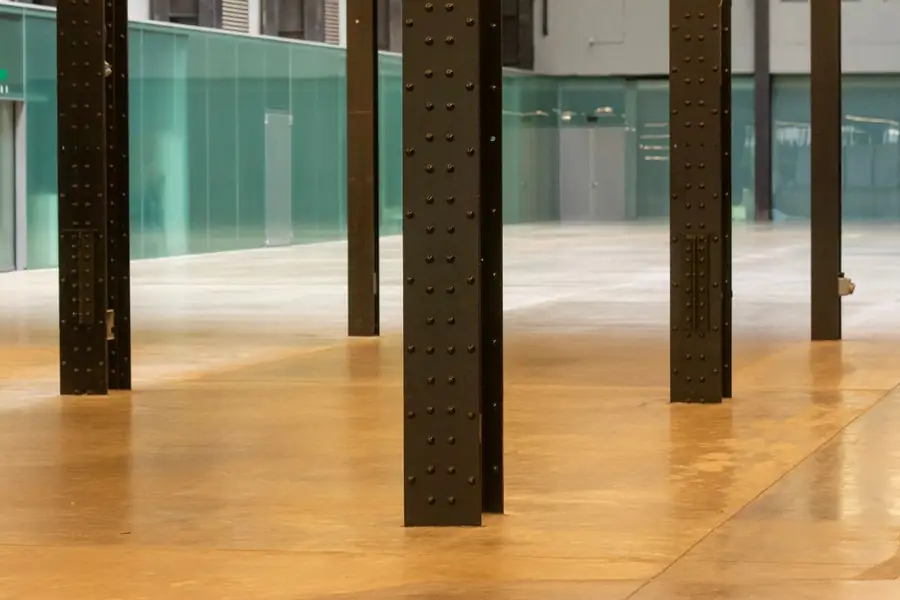
Sealed amber concrete floor in a Bismarck ND interior space
Thin film and no film

Concrete Staining and Sealing in Bismarck, ND

Not every Bismarck slab wants a heavy resin coating on it. Densifiers, penetrating sealers and stains harden and colour the concrete itself, which makes them the right call where a film would be a liability.

Staining and sealing is the thin-film end of concrete coatings. Instead of building 20 to 40 mils of resin on top of the slab, you colour and harden the concrete itself, then protect it with a sealer that sits at or just below the surface. Installed cost typically runs about $3 to $7 per square foot, well under a full epoxy or polyaspartic build.

The reason to consider it in Bismarck is not just price. A film coating can delaminate. A penetrating treatment cannot, because there is no film to lose.

When We Tell a Bismarck Homeowner Not to Coat

Three situations come up often enough here that they are worth naming plainly.

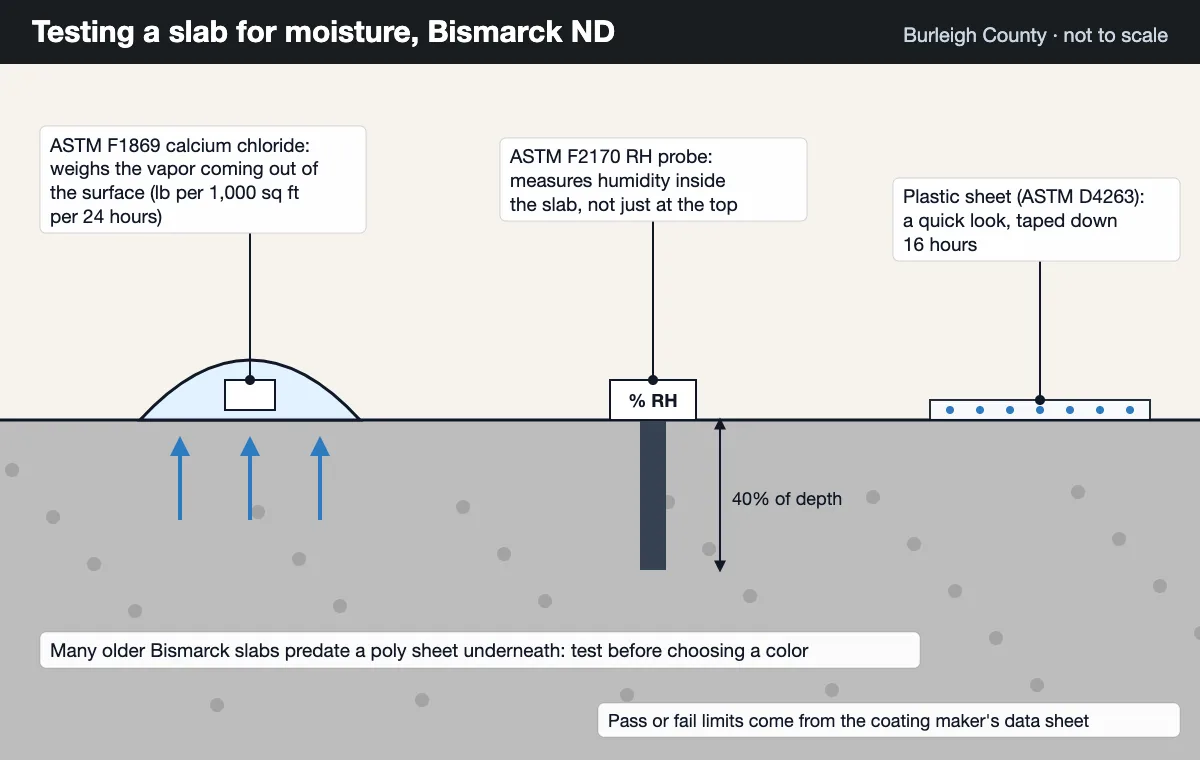
Slabs poured without a vapour retarder.Bismarck's older central and south side housing stock, and a good share of Mandan across the river, predates a poly sheet under the slab being routine. If a slab sits on damp ground with nothing between, moisture moves up through it continuously. A film coating traps that vapour and blisters. A breathable penetrating sealer does not.

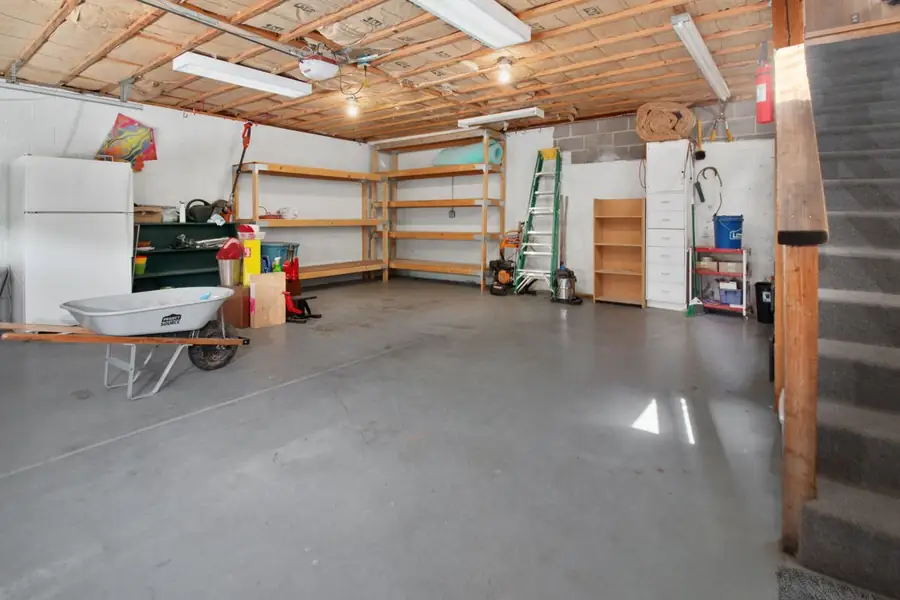
Basement slabs. Same issue, plus a basement floor is below grade and sitting against soil that is frozen four feet deep for part of the year and saturated in the spring melt. Densify and seal is very often the correct specification down there, not epoxy.

Large unheated shop slabs on a real budget. A 40 by 60 pole barn is 2,400 square feet. A full coating on that is a significant number. Densifying the wear surface and sealing it delivers a large fraction of the dust control and stain resistance for a fraction of the cost, and it can be upgraded to a coating later without wasted work.

Densifiers, Sealers and Stains: What Each One Does
Silicate densifiers

A lithium, sodium or potassium silicate reacts with free lime in the concrete and forms additional calcium silicate hydrate inside the pores. The slab gets harder and tighter and stops dusting. No film, no sheen change to speak of, and it is the first step on almost every shop floor we treat.

Penetrating sealers

Silanes and siloxanes that line the pore walls and repel liquid without forming a surface layer. These are the right product where chloride absorption is the concern but a film is not wanted, for example an unheated detached shop or an exposed slab edge.

Film-forming sealers

Acrylics and urethanes that leave a thin visible layer and a sheen. Easier to recoat than a full epoxy build but they can still whiten or peel if applied over a damp slab. Used indoors more than in a salt-exposed garage.

Acid and reactive stains

React with the lime in the concrete for a permanent, variegated, translucent colour. Beautiful and genuinely unpredictable on an old slab, because the result depends on the original mix and finish.

Water-based dyes

Pigment carried into the surface without a chemical reaction. Far more predictable colour, a much wider palette, and the safer choice when a homeowner has a specific shade in mind.

The honest limitation

A sealed floor is not a coated floor. In the salt-slush drip zone of a Bismarck garage, a penetrating sealer slows chloride ingress but does not eliminate it, so surface scaling is delayed rather than stopped. If the parking strip is already pitted, put the money into repair and a proper coating instead. Garage floor coating in Bismarck →
Concrete Staining and Sealing Bismarck ND: Frequently Asked Questions

When is sealing a better choice than a full epoxy coating?

When the slab has a moisture question you cannot resolve economically, when the budget will not support a proper three-layer build, or when the look you want is the concrete itself rather than a resin surface. A penetrating sealer does not form a film that can delaminate, so it cannot fail the way a coating can. It also will not last as long, typically three to seven years before a recoat rather than ten to fifteen.

What is the difference between a densifier and a sealer?

A densifier is usually a lithium, sodium or potassium silicate that reacts with free lime in the concrete to form additional calcium silicate hydrate inside the pore structure. It hardens and tightens the concrete itself and leaves no film. A sealer sits at or just below the surface and blocks liquid entry. On a shop floor the common answer is both: densify first to harden the wear surface, then seal to stop staining.

Will acid staining work on a Bismarck basement slab?

Sometimes. Acid or reactive staining relies on a chemical reaction with the lime in the concrete, so the result depends entirely on the mix, the finish and whatever the slab has absorbed over the years. Older Bismarck basement slabs are unpredictable and the result is genuinely mottled and variable, which some homeowners love and others hate. Water-based dyes are far more controllable and are the safer recommendation if you have a specific colour in mind.

Can you seal a garage floor instead of coating it?

You can, and it is a real option for a large detached shop where a full coating is out of budget. Be clear about the trade-off in this climate: a penetrating sealer reduces chloride absorption but it does not build a continuous film, so the salt-slush drip zone still gets wet concrete underneath. It slows scaling rather than stopping it. On a garage that already has a pitted parking strip, a coating is the better investment.

How long does a sealed concrete floor last in North Dakota?

Plan on three to seven years in a garage or shop before it wants a maintenance coat, and longer in a basement or a low-traffic interior. Deicing salt shortens that cycle. The good news is that recoating a sealed floor is a wash, dry and reapply job rather than the grind-and-rebuild that a failed film coating requires.

Is stained concrete cold underfoot in a Bismarck basement?

Yes, as cold as any concrete slab, because no thin-film treatment adds meaningful insulation. If comfort underfoot is the goal, stained and sealed concrete is the wrong product and an insulated subfloor is the right conversation. If durability, moisture tolerance and a hard-wearing finished surface are the goal, it is an excellent one.

Not Sure Whether to Coat or Seal?

Send us the slab, the building and what it is used for. We will tell you which one is the right spend, including when the answer is the cheaper one.

Get a Free Quote
Get a Free QuoteWritten estimate, no obligationSee Pricing