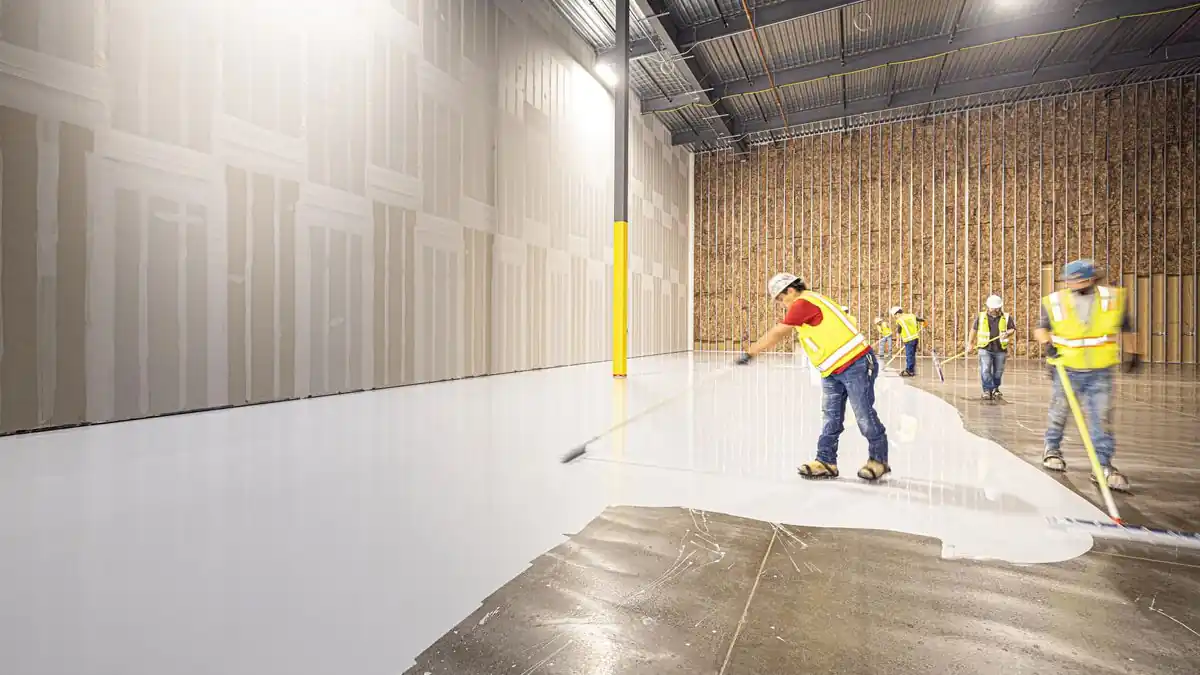
Epoxy Flooring in Bismarck, ND
Professionally installed epoxy flooring in Bismarck runs roughly $4 to $12 per square foot, about $2,600 to $7,000 for a 576 square foot two-car garage, as a three-layer, 20 to 40 mil system over diamond-ground concrete. It is built for a slab that spends four months a year taking road salt and freeze-thaw. Get the warranty in writing. Not a $79 kit and a wet Saturday.
- Diamond grinding, not acid etch
- Flake, solid, metallic and polyaspartic
- Cold-season installs done properly
- Free written quote, no obligation
Why Bismarck Garage Slabs Give Up Before Anything Else in the House
A garage floor in Bismarck is not just a concrete floor. It is the one surface in your house that gets a chloride bath four months a year. NDDOT keeps highways open with straight salt, salt and sand, and a liquid brine cut with sugar beet product that stays effective well below zero. Your vehicle carries that slurry up the driveway and drops it in the first eight to ten feet inside the door.
Salt makes the freeze-thaw worse, not just wetter
Chlorides raise the number and severity of surface freeze-thaw events. Water gets into the pores of a bare-troweled slab, freezes, expands, and lifts the finished top layer off as scaling, then as spalling. NDDOT's own figures show why the dose is so heavy here: at 30 F one pound of salt melts about 46.3 pounds of ice, but at minus 6 F it melts only 3.2 pounds, so cold snaps mean more material on the road, not less.
The damage is concentrated, which is why it looks sudden
Almost nobody loses a whole garage floor. What fails is the parking strip: the band where slush drops off the vehicle, sits, freezes overnight and thaws the next afternoon. Homeowners describe it as the floor going bad all at once, but the parking strip has usually been cycling for years while the back half of the garage stayed sound.
Bismarck slabs move more than most
Local builders put the Bismarck frost line at roughly 42 to 48 inches in a hard winter, which is why footings here go about four feet down. Deep seasonal frost and 19.05 inches of annual precipitation, most of it falling May through September, means the ground under a slab is not doing the same thing in February that it was doing in July. Joints and control cuts have to be treated as moving joints, not filled and forgotten.
Signs Your Bismarck Garage Floor Is Ready for a Coating
If you recognise three or more of these, the slab is already losing surface. A coating installed now is a finish job. Left another two or three winters it becomes a repair job first, and the repair is the expensive part.
- Grey powder on your shoes and tyres every time you cross the floor
- A pitted, flaking band in the first eight to ten feet inside the garage door
- White crusting or a chalky bloom where winter slush pools and dries
- Rust rings under the jack stands, mower or snowblower
- Oil and brake fluid stains that never fully clean up
- A previous coating lifting in tyre-shaped patches
- Hairline cracks that have opened and now catch a broom
- You are finishing the garage as living space and the floor is the last raw surface
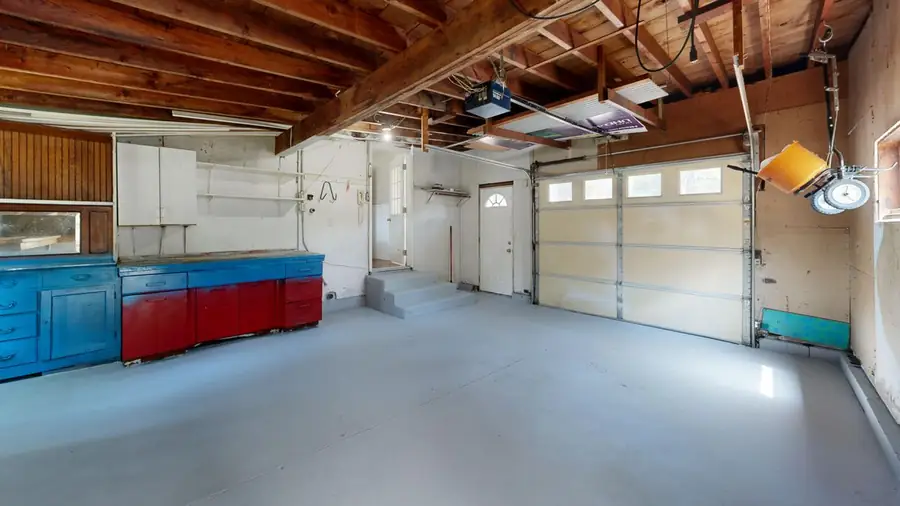
A bare, previously painted slab. Old film has to come off before anything new goes down.
Concrete Coating Services in Bismarck, ND
Concrete floor coatings only. Epoxy floors, polyaspartic, polyurea, metallic and flake systems, staining and sealing, and the grinding and slab repair that has to happen underneath all of it.
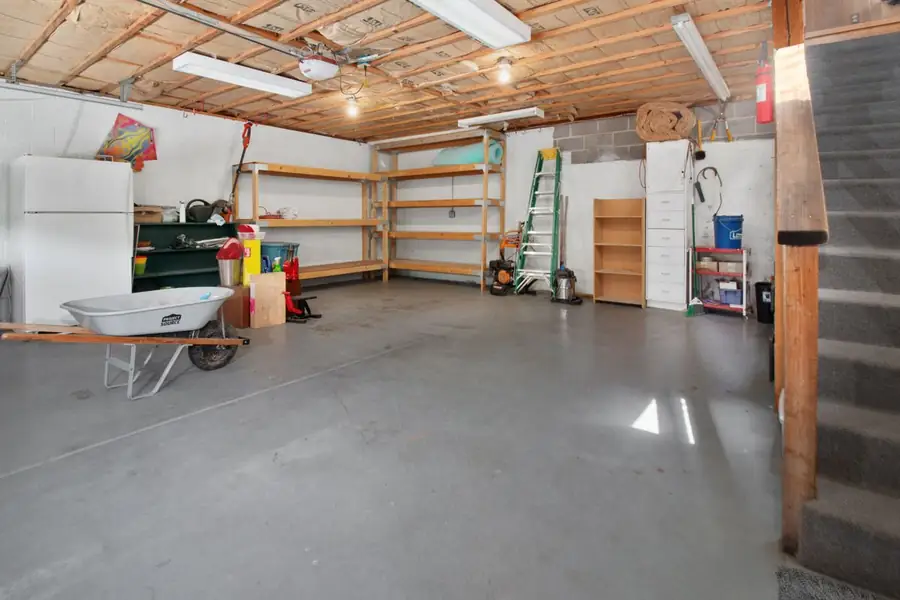
Garage Floor Coating
Full flake or solid-colour builds for attached and detached garages, engineered around the salt-slush drip zone inside the door.
Garage Floor Coatingin Bismarck →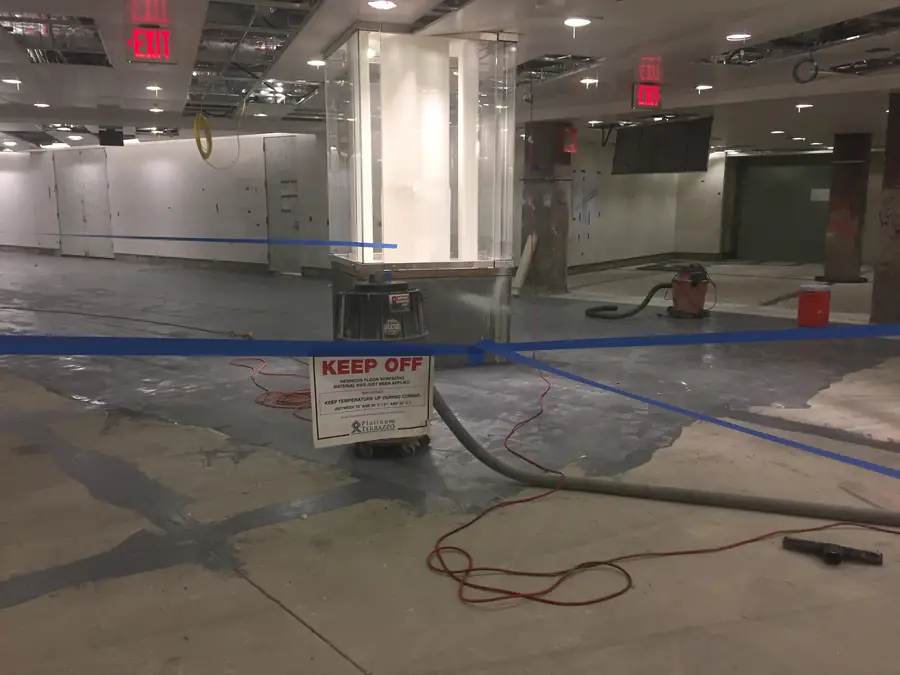
Polyaspartic and Polyurea
The cold-climate system. Cures at temperatures that stop epoxy dead, returns to service in hours, and holds colour under UV.
Polyaspartic and Polyureain Bismarck →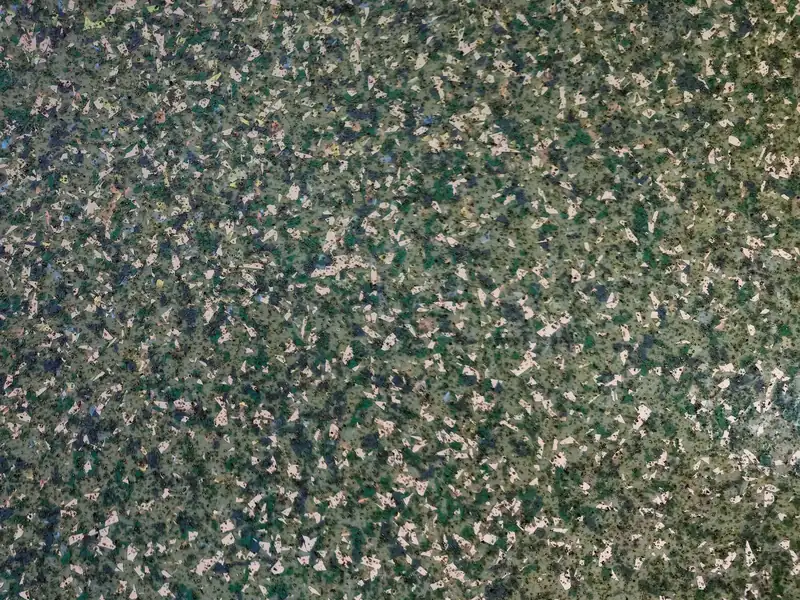
Metallic and Flake Epoxy
Chip size, flake density and sheen level chosen deliberately. A full broadcast hides a repaired slab that a solid colour will show.
Metallic and Flake Epoxyin Bismarck →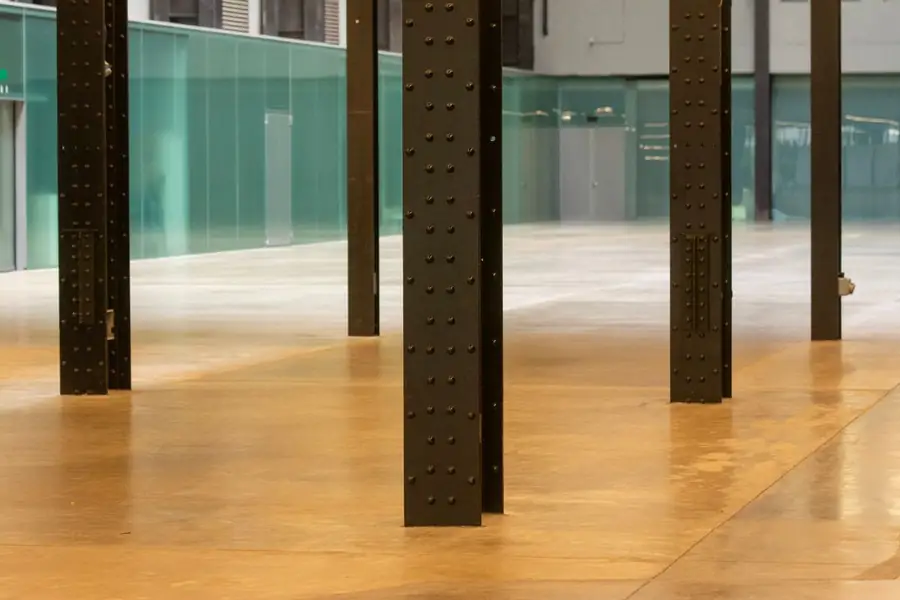
Concrete Staining and Sealing
For slabs that should not carry a heavy film. Densifiers, penetrating sealers and acid or dye staining for basements and shop floors.
Concrete Staining and Sealingin Bismarck →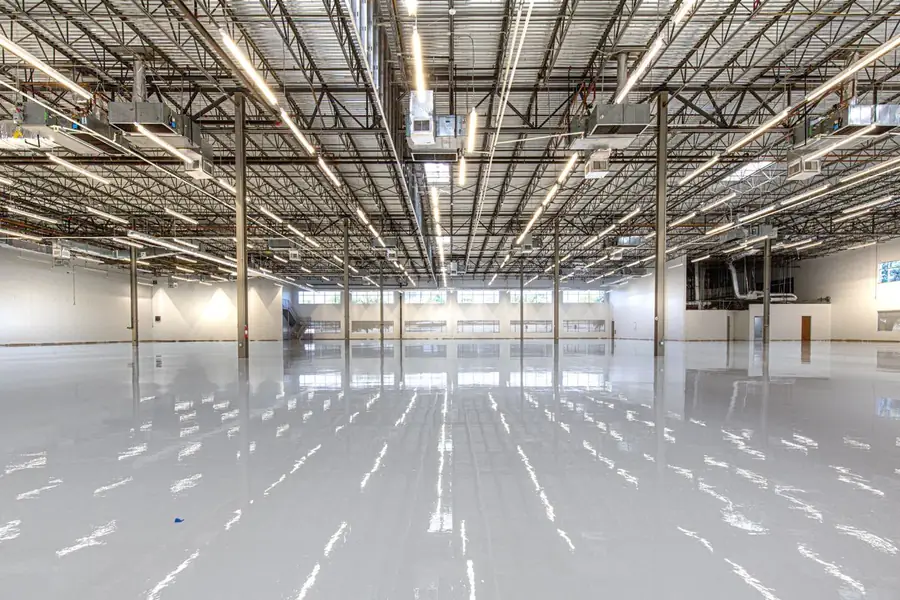
Shop and Commercial Floors
Detached shops, pole barns, service bays and light industrial slabs. Systems rated for forklifts, jack stands and dropped tools.
Shop and Commercial Floorsin Bismarck →Concrete Repair and Prep
Diamond grinding to profile, spall and joint repair, moisture checks. The half of the job that decides whether the coating lasts.
Concrete Repair and Prepin Bismarck →The Bismarck Install Window Is Real, and It Decides Your System
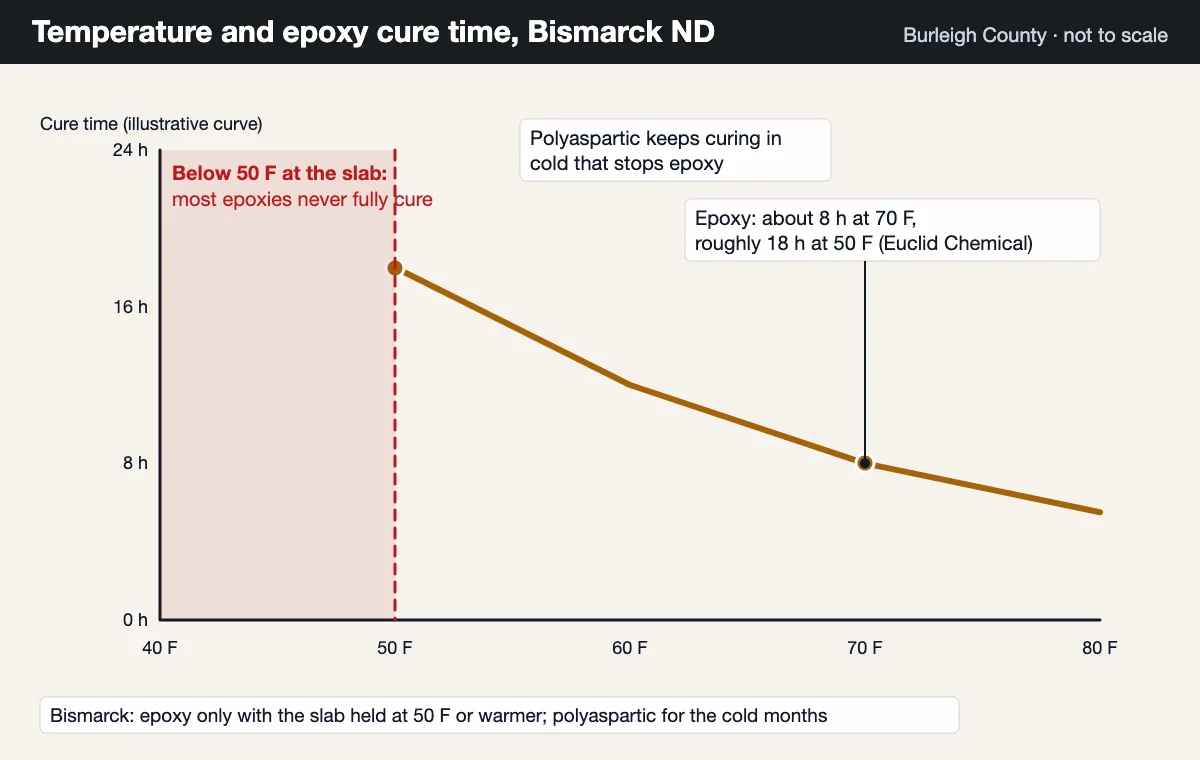
Standard epoxy is best applied above 50 F, and Euclid Chemical is blunt about the consequence of ignoring that: most epoxies, unless specifically formulated for cold weather, will never fully cure below 50 F. Cure rate is not linear either. For every 18 F the temperature drops below 70 F, the cure time doubles, so an 8 hour cure at 70 F stretches to roughly 18 hours at 50 F.
Now put that against the local calendar. Bismarck's cold season runs about 3.4 months, roughly November 24 to March 4, with average highs below 35 F and a January average of 24 F high and 6 F low. An unheated garage or a detached pole barn is not holding a 50 F slab through a five to seven day epoxy cure in that stretch. A heated attached garage frequently is.
That is the entire reason polyaspartic and polyurea exist in this market. They are aliphatic polyurea chemistry, they are not gated on temperature the way an amine-cured epoxy is, and manufacturers publish application windows far below epoxy's. It is also why the slab gets measured with an infrared thermometer rather than reading the air temperature off a phone. The slab is what the coating touches.
A contractor's own placard on a fresh resinous floor: keep temperature up during curing, between 70 F and 90 F. That instruction is why the calendar matters here.
Epoxy, Polyaspartic, Flake or Stain: What You Are Actually Choosing Between
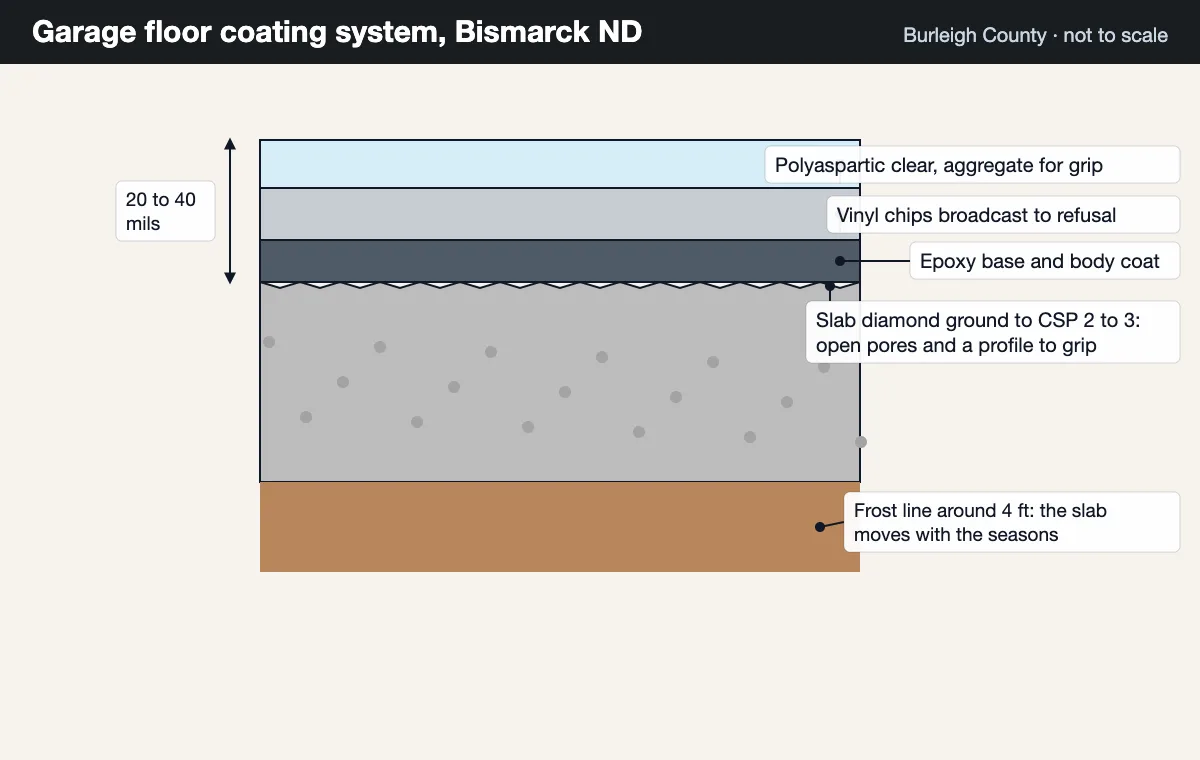
Done properly, epoxy flooring is not paint and it is not a kit. It is a resinous build, typically 20 to 40 mils thick, keyed into a diamond-ground slab. Homeowners search for garage floor epoxy, concrete coatings, polyaspartic and epoxy floors as if they were four products from four trades. They are four points on one spectrum, and the right one depends on your garage, not on the brochure.
Epoxy
Two-part amine-cured resin. Thick per coat, strong build, good at filling a rough or repaired slab, and the most cost-effective body coat available. Its limitation is temperature: it is best applied above 50 F and most formulations never fully cure below that. Garage floor coating in Bismarck →
Polyaspartic and polyurea
Aliphatic polyurea chemistry produced from a polyaspartic ester. Cures at temperatures that stop epoxy, returns to service in hours rather than days, and holds colour under UV instead of ambering. Costs more per square foot and gives the installer a shorter working window. Polyaspartic coatings →
Flake and metallic systems
Not separate chemistries, but decorative layers inside the build. Vinyl flake is broadcast into a wet body coat, then encapsulated. Metallic uses pigment dispersed in a clear resin and moved on the floor. Flake density and chip size are decisions, not defaults. Metallic and flake epoxy →
Stains, densifiers and penetrating sealers
Thin-film or no-film options. They colour and harden concrete without building a coating that can delaminate, which makes them the right call on some basement and shop slabs where moisture is a question mark. Concrete staining and sealing →
Coating Systems and What They Cost in a Bismarck Garage
Not one contractor in the Bismarck-Mandan market publishes a price. We think that is a bad way to treat a homeowner who is trying to budget, so here are the 2026 national survey ranges by system, with the local reason you would pick each one.
| System | Best for | Installed range | Realistic life | Trade-off |
|---|---|---|---|---|
| Solid colour epoxy | Clean shop look, budget builds | $4 to $8 per sq ft | 5 to 10 years | Shows every patch and repair |
| Flake broadcast epoxy | Most Bismarck garages | $6 to $12 per sq ft | 10 to 15 years | Hides repairs, adds slip resistance |
| Polyaspartic build | Unheated garages, winter installs | $10 to $16 per sq ft | 15 to 20 years | Cold cure, fast return to service |
| Metallic epoxy | Finished garages, showrooms | $12 to $20 per sq ft | 10 to 15 years | Decorative, needs a sound slab |
| Stain and seal | Basements, thin-film situations | $3 to $7 per sq ft | 3 to 7 years | Recoat cycle, not a permanent film |
Ranges from 2026 HomeGuide, Angi and Homewyse survey data. A 24 by 24 two-car garage is 576 square feet. Slab repair, old coating removal and moisture mitigation are priced separately because they vary more than the coating does. Full Bismarck cost breakdown →
Reading a Bismarck Epoxy Flooring Quote
Homeowners arrive at a quote with a national number in their head and no way to test it. Three things explain almost every gap between two quotes on the same garage.
Floor Coating That Works to the Bismarck Calendar
Bismarck Epoxy Floors covers concrete floor coating in Bismarck, Mandan, Lincoln and the surrounding Burleigh County and Morton County communities. Concrete floors only, not carpet, vinyl plank, tile or hardwood.
When you compare installers, look for one with its own grinder rather than a rental, more than one chemistry on hand so the season does not force a bad recommendation, and the honesty to say when the right answer is a penetrating sealer instead of a film, or a spring booking instead of a January one.
The market here is genuinely a corridor. Bismarck sits on the east bank of the Missouri at 1,745 feet, Mandan is directly across the river at 1,647 feet, and Lincoln is on the south edge at 1,690 feet. Between them the Bismarck-Mandan metro is about 135,800 people. We treat it as one service area because that is how people actually live in it.
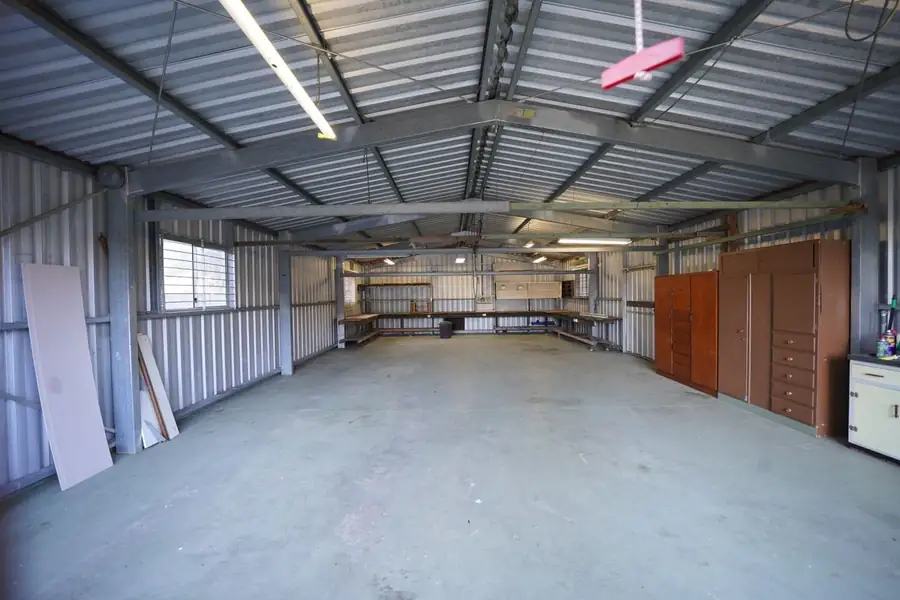
Detached shops and pole barns are a large share of the work in this market, and they are almost always unheated.
How a Bismarck Floor Coating Job Actually Runs
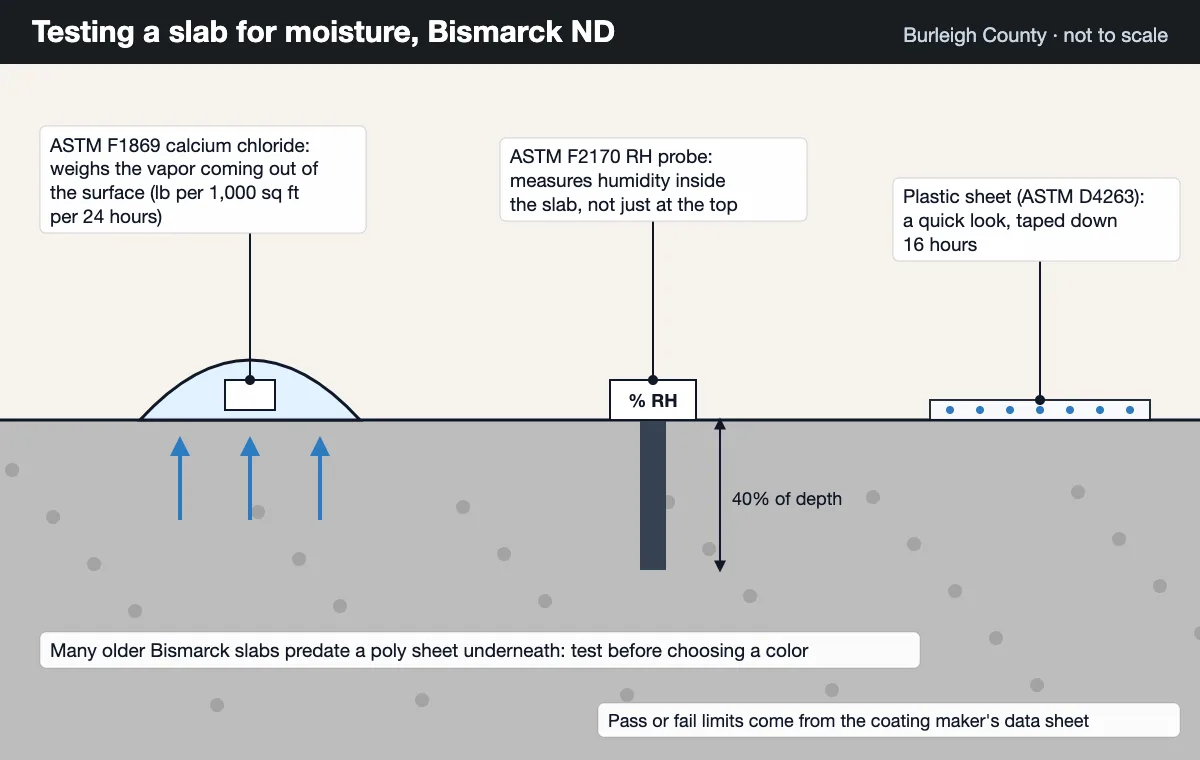
Walk the slab
The drip zone, the cracks, the joints and any previous coating get looked at, and moisture gets checked. Many older Bismarck and Mandan slabs were poured before a vapour retarder was standard, and a film over an active moisture drive blisters. If the floor is a bad candidate you hear it before you spend anything.
Written scope and price
You get the system, the mil build, the repair line items and the price in writing. Not a number over the phone that changes on install day.
Grind, repair, prime
Diamond grinding to an open profile, spalls and cracks cut out and filled, joints treated, then the base coat goes down on a temperature-checked slab.
Broadcast, topcoat, hand back
Flake or pigment goes in wet, the floor is scraped and vacuumed, the topcoat goes on, and you get written cure times for foot traffic and for vehicles. Skipping the topcoat is where a cheap quote finds its savings.
Floor Coating Coverage
Bismarck and the whole Bismarck-Mandan corridor, plus the Burleigh and Morton County communities within reasonable reach of it.
Bismarck Floor Coating Guides
Epoxy Floor Cost in Bismarck
What a coated garage floor actually costs, per system, and the five things that move the number.
Read Guide →Installing a Floor Coating in a Bismarck Winter
The 50 F rule, the 3.4 month cold season, road salt chemistry, and how winter installs are actually done here.
Read Guide →Do You Need a Permit in Burleigh County
What Bismarck's permit list actually covers, what it leaves out, and the garage work that does trigger a permit.
Read Guide →Epoxy Flooring Bismarck ND: Frequently Asked Questions
How much does epoxy flooring cost in Bismarck?
No contractor in the Bismarck-Mandan market publishes a price, so here is the honest range. National 2026 survey data puts a professionally installed garage coating at roughly $4 to $12 per square foot: a single-coat budget system runs about $4 to $8, a full flake broadcast about $6 to $12, polyaspartic about $10 to $16, and metallic about $12 to $20. A standard 24 by 24 two-car Bismarck garage at 576 square feet therefore lands somewhere between about $2,600 and $7,000 depending on the system and how much slab repair the floor needs first. Our cost guide breaks down what pushes a quote up.
Can a garage floor be coated in the winter in North Dakota?
Yes, but only with the right chemistry. Bismarck's cold season runs about 3.4 months, from roughly November 24 to March 4, with average daily highs under 35 F and a January average low of 6 F. Standard epoxy needs a slab at 50 F or warmer held right through the cure, and Euclid Chemical states plainly that most epoxies never fully cure below 50 F. An unheated Bismarck garage will not hold that. A heated attached garage often will, and polyaspartic systems are formulated to cure far colder. Slab temperature should be measured with an infrared gun before anything is mixed.
Will road salt damage a coated garage floor?
It will damage a bare one much faster. NDDOT treats highways with straight salt, salt and sand, and a salt brine blended with sugar beet product that stays effective well below zero. Every vehicle drags that slurry home and drops it in the first eight to ten feet inside the door. On bare concrete the chlorides drive repeated surface freeze-thaw and the top layer scales off. A properly bonded coating is a continuous film with no pores for the brine to enter, which is exactly why the drip zone is the part of the floor a coating earns its money on.
Epoxy or polyaspartic, which is right for my garage?
Epoxy is thicker per coat, cheaper, and builds a heavy body that fills a rough slab well. Polyaspartic is aliphatic polyurea chemistry: it cures at much lower temperatures, returns to service in hours instead of days, and does not amber under UV. In a Bismarck garage the common answer is both, an epoxy base coat with a flake broadcast and a polyaspartic topcoat. If the garage is unheated or the job is happening between November and March, polyaspartic through the full build is usually the only system that will cure properly.
My slab is already pitted and flaking. Can it still be coated?
Usually yes, but the repair comes first and it is not optional. Scaled and spalled areas get ground back to sound concrete, the edges are cut square, and the voids are filled with a polymer-modified patch or a fast-set mortar before any coating goes down. Coating over loose material simply moves the failure plane: the film stays intact and the concrete under it lets go. If a slab has lost more than roughly a quarter inch of surface across a wide area, you should hear so and see the repair priced separately.
How long before I can walk on it and park on it?
With a standard epoxy build at 70 F, expect foot traffic the next day and vehicles after about five to seven days. Cure time is temperature dependent in a way most homeowners do not expect: for every 18 F the temperature drops below 70 F, epoxy cure time doubles, so an 8 hour cure at 70 F becomes roughly 18 hours at 50 F. A polyaspartic build is far quicker, commonly foot traffic the same evening and vehicles inside 24 to 48 hours, which is a real advantage on a one-car garage you still need to use.
Do I need a permit for a garage floor coating in Bismarck?
No. The City of Bismarck lists permits for new construction, change of occupancy, additions, renovations and remodels including basement finishes, decks, sheds, garages, pools, sunrooms and gazebos, plus electrical, plumbing and HVAC work. Floor finishes and coatings do not appear on that list. Permits do come into play if you are building the garage, finishing a basement around the slab, or adding a unit heater or floor drain at the same time. The permit guide covers where the line sits.
Is a hardware store kit good enough for a Bismarck garage?
A one-gallon kit is a thin waterborne product applied over an acid etch, and etching does not open a bare-troweled Bismarck slab the way diamond grinding does. That is why kits are the ones you see peeling in sheets where the tires sit, a failure called hot tire pickup: the tire warms the film, softens it, and pulls it off as it cools. The difference in a professional job is not the bucket, it is the grinder, the moisture check, the crack repair and the mil thickness. If you park a vehicle on it through a Dakota winter, the prep is the product.
What is the difference between epoxy floors and concrete coatings?
Concrete coatings is the umbrella term. Epoxy is one chemistry inside it, alongside polyaspartic, polyurea, urethane and thin-film sealers. When a Bismarck homeowner says epoxy floors they usually mean a full resinous garage floor system, which in practice is often an epoxy base coat, a vinyl flake broadcast and a polyaspartic or urethane topcoat. Calling the whole thing epoxy is fine, but the system matters more than the label.
How many coats does a proper Bismarck garage floor system have?
Three layers is the normal build: a primer or base coat that soaks into the ground profile, a body coat carrying the pigment or receiving the flake broadcast, and a clear topcoat that takes the abuse. Single-coat jobs exist and they are the cheap end of the market, roughly $4 to $8 per square foot. They wear through at the tyre tracks first, usually inside five years in a garage that sees salt.
Does the concrete need to be new for epoxy flooring to work?
No, but new concrete has its own rule. Fresh slabs need roughly 28 days to cure before coating so the moisture drive drops and the surface strength is there. Older Bismarck slabs are usually fine and often better candidates, because a 20 year old floor has already done its shrinkage. What matters is whether the surface is sound after grinding, not the age on the pour.
How long does epoxy flooring last in a North Dakota garage?
A properly ground and built flake system in a residential garage should give 10 to 15 years, and a polyaspartic build 15 to 20. What shortens it is almost never the resin, it is the prep. A coating bonded to a laitance layer or an acid-etched surface can start lifting inside two winters, because the salt-slush drip zone works the film harder than anything else in the house.
Can a floor that already has a failing coating on it be coated?
Yes, and the old film has to come off. Grinding through a previous coating is slower and dustier than grinding bare concrete, and it is priced as its own line item. What should never happen is a scuff-sand and recoat over a film that is already delaminating, because the new coating inherits the old bond failure and you pay twice.
Tell Us About Your Slab
Send the basics and we will come back with a written scope, a system recommendation for your garage type, and a real number. If the honest answer is to wait for spring, you will hear that too.
- Free written scope, not a verbal number over the phone
- Diamond grinding, no acid etch shortcuts
- Cold-weather scheduling handled honestly, not oversold
- Ask for proof of insurance and the warranty in writing
Get a Free Written Quote for Your Bismarck Floor
Garages, shops, basements and light commercial slabs across Bismarck, Mandan and Lincoln.
Get a Free Quote